
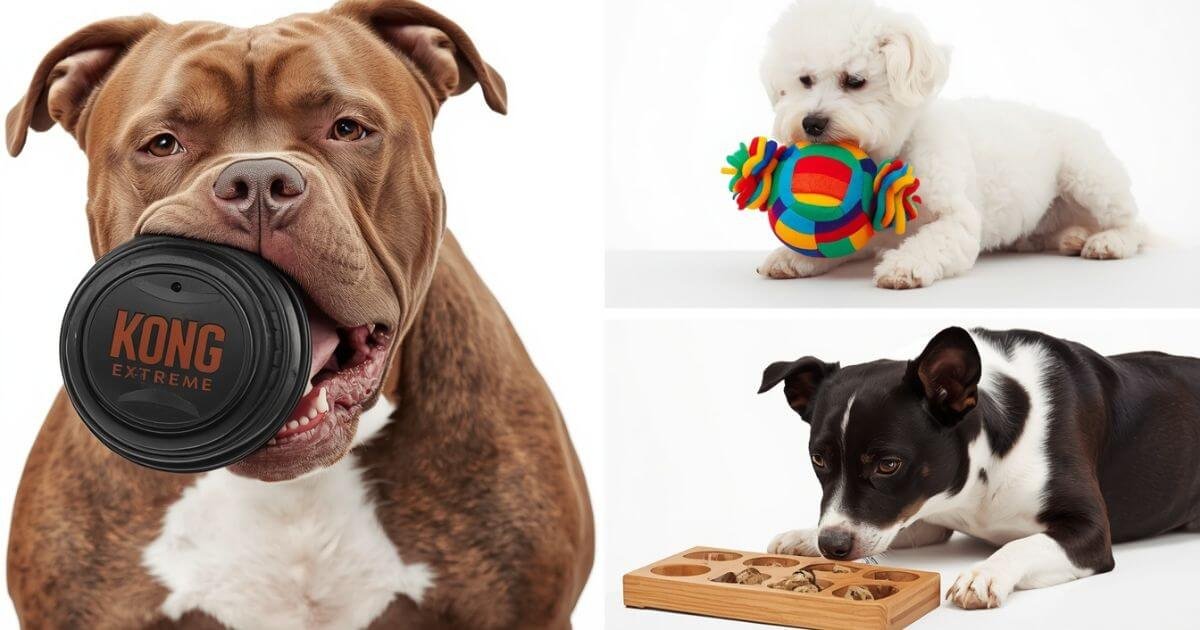
Dog Breed Toys: Importance and How to Pick the Right Ones for Your Furry Friend
Introduction
Your neighbor's Labrador can destroy an "indestructible" chew toy in ten minutes. Your Chihuahua views the same toy as a piece of furniture. That's not bad luck; that's biology. A dog's breed affects its jaw strength, prey drive, energy level, and play style, and a toy that works wonderfully for one breed can be boring, useless, or even dangerous for another.
Why One Toy Doesn't Fit All Dogs
Breed matters because dogs aren't bred to be identical. A Border Collie is bred over generations to stare down sheep and respond to the slightest movement. A Bulldog was designed for a low center of gravity and a jaw built to hold, not chase after. Give a Collie a soft, slow toy, and it will lose interest in minutes. Give the Bulldog a weak squeaker, and it'll be flat within the hour.
Size is the obvious one, but it's not the only one. Jaw strength varies enormously—a Mastiff's bite force can be more than five times that of a small terrier. Play style varies too: retrievers want to fetch and carry; terriers want to shake and "kill"; herding breeds, such as Border Collies and Australian Shepherds, do well with motion-oriented toys like flirt poles or frisbees because their instincts are to want to chase and nip; and sighthounds often prefer a quick chase to any kind of chewing at all. Ignore these differences and you end up buying toy after toy that gets shredded, ignored, or worse, eaten.
Chewers vs Gentle Mouths: Match the Toy to the Jaw

Some breeds chew due to boredom. Some chew because it's damn near instinctual. The second group includes dogs like Labradors, Rottweilers, Mastiffs, and American Bulldogs—they were bred for jobs that involved carrying, gripping, or holding, and that instinct doesn't disappear just because the job did.
Heavy Chewers: For breeds with strong jaws, look for rubber toys rated for aggressive chewers, solid nylon bones, or reinforced rope toys with heavy stitching. Avoid anything with small removable parts, thin plastic, or stuffing—these are quickly ripped open and swallowed. A toy that will last a week with a Beagle may not last an afternoon with a Rottweiler.
Gentle Chewers & Tiny Breeds: Chihuahuas, Papillons, and other small or soft-mouthed breeds often cannot safely use heavy-duty chew toys, which are unnecessary for them. The rubber bone for a Cane Corso is often too challenging for a small dog's teeth and jaw, sometimes causing enamel to crack or wear. Smaller, softer plush toys, thin rope, and lightweight rubber are more appropriate, and they are sized so the dog can actually get his mouth around them.
Energy Levels: What Fun Looks Like for Dogs

The right toy can significantly help tire out a dog. A tired dog is a good dog. But energy needs vary wildly by breed.
- High-energy working and herding breeds (Border Collies, Australian Shepherds, and Belgian Malinois) do best with toys that involve movement—flirt poles, treat-dispensing balls, frisbees, or anything that mimics chasing.
- Scent hounds (Beagles, Bloodhounds) prefer to play with puzzle feeders and snuffle mats over fetch toys because their noses lead, not their eyes.
- Sighthounds (Greyhounds, Whippets) tend to enjoy a quick, intense chase rather than extended chewing—a lure toy or a squeaky ball thrown quickly is more their style than a tug-of-war with a rope.
- Low-energy or brachycephalic breeds (Bulldogs, Pugs, and Basset Hounds) tend to overheat quickly, so short bursts of play with soft, easy-to-carry toys work better than anything requiring sustained sprinting.
Purchase for the breed's actual drive, not for what looks good on a store shelf. A $30 automatic launcher is wasted on a dog who'd rather sniff out a treat than run after a ball.
Prey Drive & Instinct-Based Play
Terriers were bred to hunt vermin and kill them, and that instinct comes out in play. A squeaky toy that sounds like a small animal in distress can trigger a fierce "shake and kill" response in a Jack Russell or a rat terrier—which is precisely why squeaky plush items are often their favorites and why those toys rarely last.
A variation of the same instinct in herding breeds is nipping, circling, and chasing instead of shaking. Toys that move in unpredictable ways, such as balls weighted off-center, tend to hold their attention longer than a toy that just sits there waiting to be picked up.
Retrievers are, predictably, constructed around the retrieve itself. A golden retriever or Labrador with a soft mouth will often prefer a toy to carry proudly around the house to a toy to be destroyed—this is why retrievers are excellent candidates for training with soft dumbbells or floating toys for water play.
Toy Types Comparison by Breed Group
| Breed Group | Suitable Toy Types | To Avoid |
|---|---|---|
| Heavy Chewers (Rottweiler, Mastiff, Bulldog) | Rubber chews, nylon bones, heavy-duty rope | Thin plastic, small squeakers, stuffed plush |
| Small breeds (Chihuahua, Papillon) | Soft plush, thin rope, light-weight rubber | Heavy-duty rubber, oversized bones |
| Herding breeds (Aussie, Border Collie) | Treat balls, frisbees, flirt poles | Motionless toys without difficulty or movement |
| Scent Hounds (Beagle, Bloodhound) | Puzzle feeders, snuffle mats | Scentless, non-food toys |
| Sighthounds (Greyhound, Whippet) | Fast-bounce balls, lure toys | Chew toys, heavy tug ropes |
| Retrievers (Labrador, Golden) | Tennis balls, floating toys, soft dumbbells | Toys too small to be fetched safely |
Safety First, Fun Second

The most dangerous toy mismatch isn't a bored dog; it's a choking hazard. A tennis ball, perfectly safe for a Great Dane, is a real choking hazard for a small terrier that can get the entire thing in its mouth. A toy that is sized for a small dog, on the other hand, can be swallowed whole by a large dog that doesn't chew before gulping.
Before you buy, verify three things: the size of the toy in relation to your dog's mouth, if any parts (eyes, squeakers, stuffing) can be pulled out and swallowed, and if the material is rated for your dog's chew strength. Replace broken toys before they come apart, not after—most incidents of swallowing are with toys that were already broken.
Take the quiz to discover which dog breed is right for you – recommended by dog behaviour specialists.
Woodgreen Breed ExplorerFrequently Asked Questions
How to Choose the Right Toy Starts With Knowing the Breed
The quickest way to stop throwing your money away on toys your dog won't play with or will destroy is to buy for the breed you have, not the best-seller in the toy aisle. Match the jaw strength to the material, match the instinct to the play style, and always check the size against your dog's mouth before you buy. A well-matched toy does more than entertain—it keeps your dog safe and truly engaged, breed traits and all.
Discover More Animals
Explore thousands of animal species with our free online random animal generator tool.
RANDOM ANIMAL GENERATOR