
Hybrid Macaw Species: Colours, Personality & Care Guide
Introduction
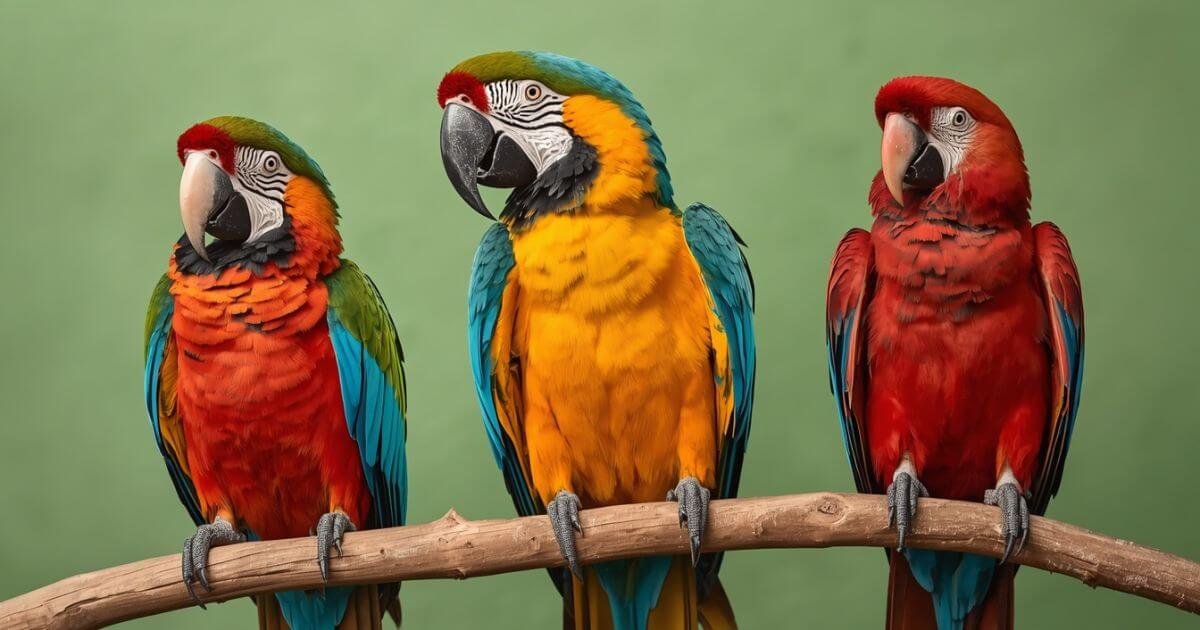
Hybrid macaws are birds that look like someone painted them without restraint. A blue and gold macaw crossed with a scarlet macaw. These parrots are captive-bred and a blend of the colours, size and personality quirks of two different macaw species and have become some of the most sought-after (and talked-about) birds in aviculture.
What Are Hybrid Macaws?
Hybrid macaws are the product of crossing two different species of macaw, almost always in captivity. This practice basically never happens in the wild — different macaw species live in different ranges and don't usually choose mates outside their own kind. Breeders changed that equation. They intentionally bred species such as the Blue and Gold Macaw with the Scarlet Macaw to produce birds with a mix of colouring, size and temperament traits that do not occur anywhere in nature.
Generations of hybrids: Two pure species mating produce an F1 hybrid — the Catalina Macaw (Blue and Gold × Scarlet) is the textbook example. An F2 hybrid is a hybrid between a hybrid and either a pure species or another hybrid – the Camelot macaw (Catalina × Scarlet) is an example. Some breeders have gone so far as to enter F3 territory, stacking hybrids on hybrids in pursuit of ever rarer colour combinations.
Most Popular Hybrid Macaw Species
There are dozens of hybrid combinations, but some keep showing up in the pet trade. Here's the low-down on the big ones:
| Hybrid Name | Parent Species | Generation | Notables (Colouring) |
|---|---|---|---|
| Catalina Macaw | Blue and Gold × Scarlet | F1 | Red chest, orange-gold body, blue-green wings |
| Harlequin Macaw | Blue and Gold × Green-winged | F1 | Deep green, blue and red mixed; heavier build |
| Camelot Macaw | Scarlet × Catalina | F2 | Bright red and yellow, more scarlet-like in size |
| Miligold Macaw | Military × Blue and Gold | F1 | Green, blue, and gold with a military's muted red brow |
| Shamrock Macaw | Military × Scarlet | F1 | Green and red, smaller than most other hybrids |
| Ruby Macaw | Scarlet × Green-winged | F1 | Deep red with green wing highlights |
| Flame Macaw | Catalina × Green-winged | F2 | Bright orange-red with dark green wings |
The pair most often confused with each other are the Harlequin and the Catalina. The giveaway is that the tail on a Catalina is shorter and less tapered than on a scarlet-influenced bird, and the harlequin tends to be stockier and greener because of its green-winged parent.
What Colours Are Hybrid Macaws?

Most of these hybrids exist solely for their colouration. Breeders deliberately cross species to chase combinations that don't occur in nature – a blue and gold's pristine yellow belly next to a scarlet's fire-engine red, for example. Colour inheritance is not fixed, so each Catalina Macaw ends up looking a little different. Two chicks from the same clutch can look quite different from each other.
One pattern breeders note: a chick usually prefers its father's colouring to its mother's, but this preference is not an absolute rule. That's part of the reason hybrid breeding is still hit and miss—and why serious buyers want to see both parent birds before they buy.
Hybrid Macaw Temperament & Personality

You can't predict a hybrid's personality the way you can predict a rough colour range, but breeders make educated guesses based on the parents' traits. Cross two easy-going species and you'll probably get an easy-going bird. Combine a strong, independent species with a chatty, loving species and you often get a demanding bird that is very attached to its owner.
Catalina macaws are a wonderful example. Scarlets are inquisitive and independent. Blues and golds are warm and adept at talking. Owners often say the resulting Catalina is the best of both worlds, but only if its social needs are met. Avoid daily interaction, and a Catalina (like most large hybrids) can become loud, destructive or bite-prone.
Size, Weight & Lifespan
| Trait | Common Range |
|---|---|
| Length | 35–40 inches (beak to tail tip) |
| Weight | 2.5-3 lbs |
| Lifespan | 50-60+ years with proper care |
Lifespan is more common for most first-time buyers than they realise. Today's hybrid macaw might still require daily care in the 2080s. It's more of a commitment than owning a regular pet, more like raising a child.
Are Hybrid Macaws Present in the Wild?
Hardly ever. Wild macaws typically mate with birds of the same species, and different species often do not even occupy the same territory. Some experts have suggested the potential for natural hybridisation in rare circumstances, but there is no firm documentation to support such a claim. Practically all the hybrid macaws alive today are the result of a conscious pairing by a breeder, not a chance meeting in the rainforest canopy.
The Ethical Dilemmas of Hybrid Breeding
Not everyone in the bird world likes hybrid breeding, so it's good to know why before you buy one. Some breeders and conservationists argue that crossing species, especially if one of them is endangered, muddies bloodlines that are relevant for long-term conservation. A macaw that looks pure but carries hybrid genetics could complicate future breeding efforts to protect a threatened species. This is a valid concern and is partly why some aviculturists do not breed hybrids at all, sticking to pure species.
Hybrid Macaw Care

Hybrid macaws will inherit traits from both of their parent species, which usually means more care, not less, than a macaw of a single species.
- Space: At least a large flight cage and daily time out of the world. These are large-winged birds that do not do well in captivity.
- Social time: A few hours a day of direct personal interaction. A bored, ignored hybrid macaw is a screaming, biting hybrid macaw.
- Diet: A mix of high-quality pellets, fresh vegetables, fruit and limited nuts and seeds, not a seed-only diet which leads to nutritional deficiencies.
- Mental stimulation: Foraging toys and puzzle feeders. They are smart birds, and they get destructive when understimulated.
- Avian vet: Regular checkups are important. Macaws often hide illness until it's serious.
Hybrid vs. Pure-Species Macaw
Be honest with yourself about whether you can provide a macaw with decades of daily attention, rather than just considering your preference for its colour pattern.
⚠️ Important: Hybrid macaws are a 50-60+ year commitment. They require daily social interaction, a large cage, and regular veterinary care. Do not buy one on impulse.
Discover random bird species and butterfly generators.
🦜 Explore More Bird Guides
Discover rare bird species, fascinating bird behaviors, and random bird generators.
Frequently Asked Questions
The Bottom Line
Hybrid macaws are the product of breeders who want colour combinations that nature never dreamed of. They're beautiful, intelligent and long-lived, but that same intensity that draws you to them makes them a serious responsibility. If you're serious about one, know the parent species inside and out – that's the best clue you're going to get to how it's going to look, sound and behave for the next fifty years.
Discover More Animals
Explore thousands of animal species with our free online random animal generator tool.
RANDOM ANIMAL GENERATOR