
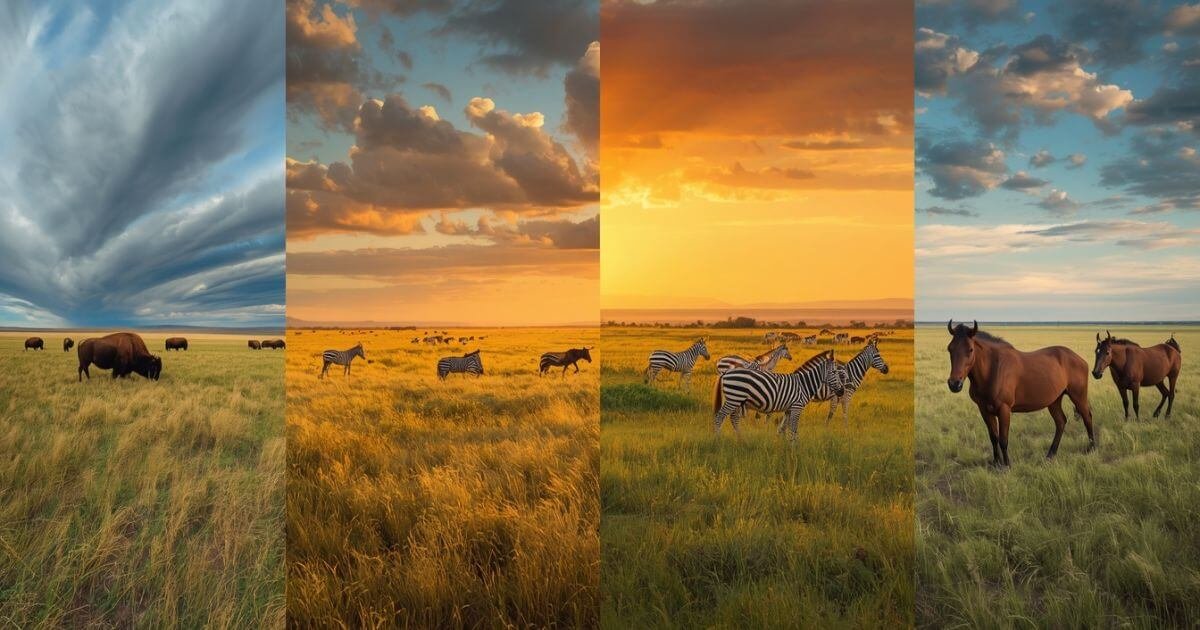
What Is a Grass-Eating Animal? Grazers, Browsers & Real-Life Examples
Introduction
A grass animal is any herbivore that eats a diet based primarily on grass. Think bison chewing their way through the prairie. Think zebras working a savanna field down to stubble. Ever wonder why some plant-eaters graze in open fields while others nibble leaves off trees? It all comes down to one word: grass. Here's what actually distinguishes a grass animal from any other herbivore out there.
What Does "Grass Animal" Really Mean?
A grazer is a herbivore that gets most of its calories from grasses rather than leaves, shrubs, or fruit. That single difference affects almost everything about the animal: its teeth, its gut, its herd behavior, and even the environment it can survive in.
Grazing is a particular feeding strategy. Grazers don't reach up high for tender leaves; they keep their heads down, working their way through low-growing grasses and grass-like plants. Bison, wildebeest, zebras, and domestic cattle are all in this category, and they have a set of adaptations that let them survive on a food source most other animals can't digest well.
Difference Between a Grazer and a Browser

Not all plant eaters are grass eaters. Herbivores in the animal kingdom have two broad feeding styles, and many species do a little of both, depending on the season.
| Feature | Grazers (Grass Animals) | Browsers |
|---|---|---|
| Main diet | Grasses, low plants, roots | Fruit, shrubs, twigs, leaves |
| Feeding height | Ground level | Chest height or above |
| Examples | Bison, zebra, wildebeest, cattle | Giraffe, deer, moose |
| Water requirements | High — often daily | Lower — moisture from leaves |
| Habitat | Open plains, prairie, savanna | Forest edge, woodland, brush |
Many animals intentionally blur the lines; elephants and impala graze and browse, taking turns as the opportunity arises, and that is one reason they can live in such a wide range of environments. Even the dedicated browsers, like giraffes, will drop down and graze in a drought if that's all there is to eat.
Animal Habitats: Types of Grasslands

Grassland animals are found in every grassland, and grasslands cover more of the planet than most people realize—they just have different names depending on the continent.
- North American prairie: Bison, pronghorn, prairie dogs
- African savanna: Zebra, wildebeest, African elephant, buffalo
- Asian Steppes: Wild horses (Przewalski's horse), water buffalo
- Pampas of South America: Capybara, guanaco, rhea
- Australian rangelands: Kangaroo, wallaby
Grasslands are grasslands because they don't receive enough rain for a forest but receive more than a desert does. That narrow window of rainfall, usually about 10 to 30 inches a year, favors deep-rooted grasses over trees, which is why there are grazing animals instead of leaf-eaters here.
How Grass-Eating Animals Digest Grass
Grass is not a simple feed. It has relatively few calories compared to leaves or fruit, and its cell wall is difficult to digest. Grass is covered with cellulose, which most stomachs cannot digest at all. Grass-eating animals have two ways of getting around these challenges:
Ruminants such as cattle, bison, wildebeest, and their relatives have four-chambered stomachs. They eat the grass quickly, regurgitate it as cud, and chew it again, passing it on for another bout of fermentation. It's the slow, rhythmic movement of the jaw that you will see on any cow standing in a field, not idle chewing, but digestion occurring.
Unlike ruminants, horses and zebras are hindgut fermenters, digesting cellulose in an enlarged section of the intestine rather than the stomach. It's a less efficient system, and that's why horses have to graze more hours in a day to obtain the same energy a cow pulls from less grass.
Either way, the reward is the same: a food source that is abundant, with little competition and nearly unlimited across an open grassland.
Why Grass-Eating Animals are Important to Their Ecosystems

Grasslands are not just where the grazers are; they are where grazers thrive. The constant grazing keeps the grass so short that tree seedlings can't obtain a foothold and shade it out. This helps explain why prairies and savannas remain open and don't gradually revert to forest. Waste and trampling also recycle nutrients to the soil faster than they would decay on their own.
Take away the grazers, and the whole structure of a grassland is altered. Overgrown grass burns hotter in wildfires; smaller ground-nesting birds lose the short cover they rely on; and predator populations that follow the herds—lions, wolves, and coyotes—lose their main food source. A grazing animal is a keystone piece of the system, not a passenger.
Explore grassland habitats and the animals that live there with National Geographic Kids.
National Geographic Kids🐾 Explore More Grassland Animals
Discover more grazing and browsing animals from around the world.
Frequently Asked Questions
Try It Yourself
Now that you understand the distinction between a grazer and a browser, test your knowledge by generating a random grass animal and see which one you encounter first.
If you'd rather see it than just read about it, check out our Random Animal Grass Generator, which generates a new grazing species with habitat, diet, and fun facts every time you click. This is a fast way for students, teachers, or curious animal fans to explore grazers from every grassland on Earth without having to thumb through an encyclopedia.
Discover More Animals
Explore thousands of animal species with our free online random animal generator tool.
RANDOM ANIMAL GENERATOR