
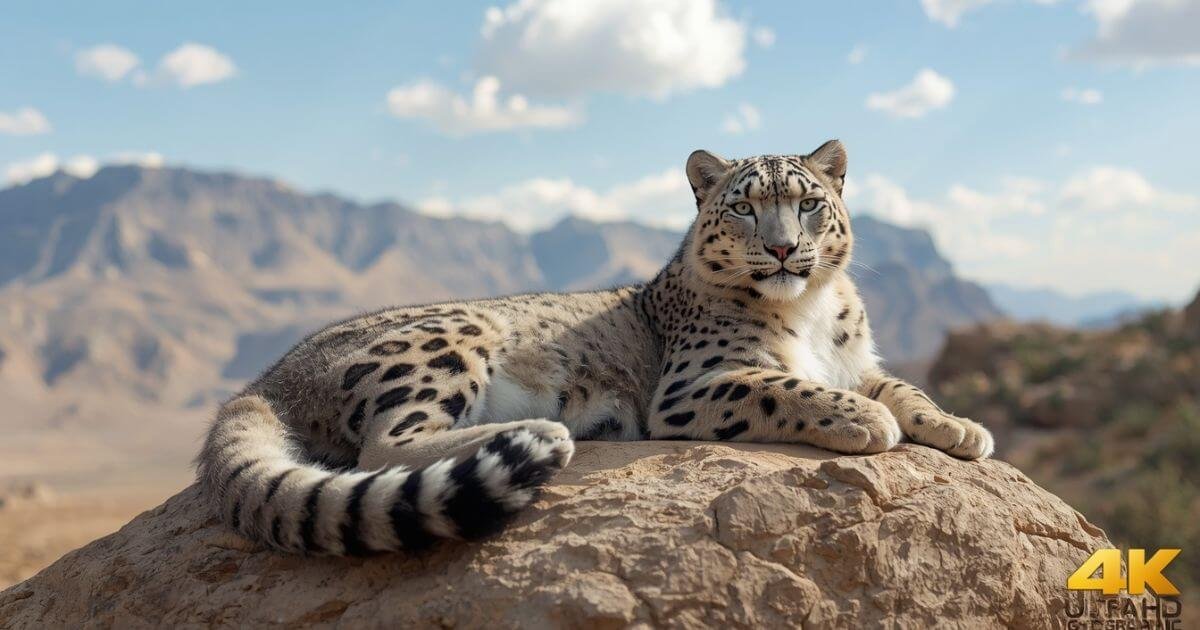
Do Snow Leopards Eat Gobi Bears? (No, Here's Why)
Introduction
Snow leopards and Gobi bears live in the exact same stretch of Mongolian desert mountains, so it's a fair question: does one hunt the other? The short answer is no. A healthy adult Gobi bear is simply too large, too strong, and too well-armed for a snow leopard to take on, and there's no documented case of a snow leopard killing one in the wild.
Do Snow Leopards and Gobi Bears Actually Share Territory?
Yes, and the overlap in their habitats is what makes the question worth asking in the first place. Both species live inside the Great Gobi Strictly Protected Area, a roughly 46,000-square-kilometer reserve in southwestern Mongolia. Gobi bears, known locally as Mazaalai, stick close to three oasis complexes around Atas Bogd Mountain, Shar Khuls, and Tsagaan Bogd Mountain. Snow leopards range more widely across the same mountainous terrain, hunting wild sheep and goats on the rocky slopes above those oases.
This allows for potential encounters between the two species. Camera traps and researchers working in the reserve have recorded both species in the same general area. Overlap in territory, though, isn't the same thing as overlap on the menu.
What Do Snow Leopards Actually Eat?

Snow leopards are built to hunt wild sheep and goats on steep, rocky ground, not to fight animals many times their size. Blue sheep, Siberian ibex, and argali make up the core of their diet across most of their range. In the Gobi's harsher, prey-scarce terrain, they lean more heavily on smaller animals when the big ungulates are thin on the ground.
- Argali and Siberian ibex — the preferred large prey, weighing roughly 80-170 pounds
- Blue sheep (bharal) — a staple across much of the snow leopard's range
- Marmots, hares, and pikas — when larger prey is scarce
- Game birds — like chukar partridge and snowcock
- Occasionally, domestic livestock — when wild prey is limited near herding communities
An adult snow leopard weighs somewhere between 60 and 120 pounds. That's already light compared to most of its prey relative to body size, and it explains a lot about why a Gobi bear is off the table entirely.
What Do Gobi Bears Eat?

Gobi bears are almost entirely plant-eaters, which is unusual for a brown bear subspecies. Their diet centers on wild rhubarb roots, grass shoots, wild onions, and berries from desert shrubs like kharmag. They'll also take insects, lizards, and the occasional carcass, but meat is a minor part of what keeps them alive. Because food and water are so scarce in the Gobi, these bears travel enormous distances between the three oasis complexes just to find enough to eat.
Why a Snow Leopard Won't Hunt a Gobi Bear
The decision is based on size and risk. A snow leopard picks prey it can kill quickly and safely, usually with a bite to the throat after a short, silent stalk. A full-grown Gobi bear weighs 90 to 100 kilograms, roughly 200 pounds, and comes with claws, raw strength, and a temperament that makes it a genuinely dangerous animal to provoke. A solitary 100-pound cat has no reason to initiate a fight with a Gobi bear.
| Trait | Snow Leopard | Gobi Bear |
|---|---|---|
| Average weight | 60-120 lbs | ~200 lbs |
| Diet type | Carnivore (wild sheep, goats, small mammals) | Mostly herbivorous (roots, grass, berries) |
| Hunting style | Ambush predator on steep terrain | Forages across oases; not a predator |
| Population estimate | ~4,000-6,500 in the wild | Fewer than 40 individuals |
| Conservation status | Vulnerable (IUCN) | Critically Endangered (IUCN) |
There's also the matter of numbers. With fewer than 40 Gobi bears left on the planet, an encounter between the two species is already a rare event, and the researchers who track both populations closely have never recorded a hunting attempt.
Could a Snow Leopard Threaten a Gobi Bear Cub?
This situation is the one scenario where the size gap narrows. A newborn or very young cub, before it's mobile and while its mother is briefly elsewhere, is small enough that a predator wouldn't need much strength to harm it. In theory, an opportunistic snow leopard could pose a risk in that narrow window. In practice, no such predation has ever been documented, and Gobi bear mothers, like other brown bears, stay close to cubs during the vulnerable early months. Researchers tracking the population point to starvation, low genetic diversity, and habitat loss as the real dangers to cub survival, not predators.
What Actually Threatens Gobi Bears

If predation isn't the concern, what is? The Gobi Bear Project and Mongolian researchers point to a handful of pressures that matter far more than any predator ever could:
- Extreme scarcity of food and water — forces bears to travel across thousands of square kilometers of desert between oases
- Low genetic diversity — a direct result of such a small, isolated population
- Climate change — reducing the quality of an already harsh habitat
- Slow reproduction rates — typical of brown bears but especially risky at this population size
Conservation groups now run supplemental feeding stations, anti-poaching patrols, and camera-trap monitoring across the reserve, working to keep the world's only desert-dwelling bear from disappearing entirely.
Learn more about snow leopard and Gobi bear conservation efforts.
🐆 Related Wildlife Guides
Explore more big cat and wildlife guides.
Frequently Asked Questions
The Bottom Line
Snow leopards and Gobi bears share some of the most remote desert mountains on Earth, but they don't share a predator-prey relationship. The snow leopard sticks to wild sheep, goats, and smaller mammals it can take down safely, while the Gobi bear spends its life foraging for roots, grass, and berries across a punishing landscape. The real story here isn't a hunt that never happens; it's two critically threatened species holding on in one of the harshest habitats on the planet.
Discover More Animals
Explore thousands of animal species with our free online random animal generator tool.
RANDOM ANIMAL GENERATOR